Designer Diaries: “Can I Actually Afford an Interior Designer?” Let's Talk Real Numbers.
Let's just get the awkward question out of the way, because I know you're thinking it.
"How much is this going to cost me, and can I even afford it?"
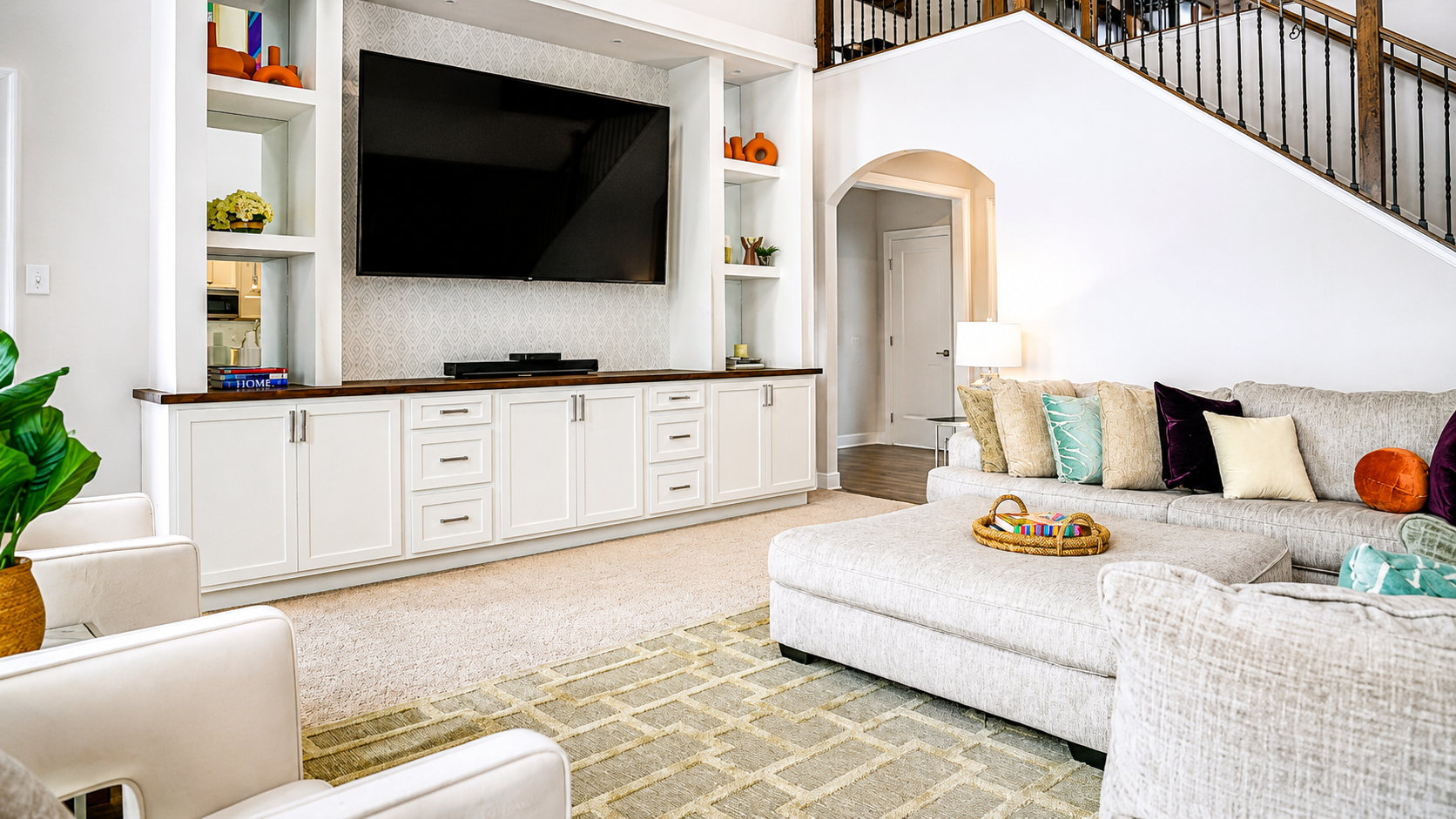
I want to answer that honestly, because the fuzzy non-answers you usually get are exactly what keep good people from ever picking up the phone. So here's the truth: interior design is not one price. It's a menu. The idea that you have to hand over your entire home and a blank check to work with a designer is old thinking, and it quietly talks a lot of wonderful people out of help they would have loved.
Let me back up and tell you where that fear comes from, because naming it helps. Most of us learned what "hiring a designer" means from television and magazines. And on TV, the designer always seems to be working on a mansion with a budget that has no ceiling. Nobody ever shows you the version where someone with a normal house and a real budget gets thoughtful, beautiful help. So of course you assume it's not for you. That assumption is the thing I most want to dismantle.
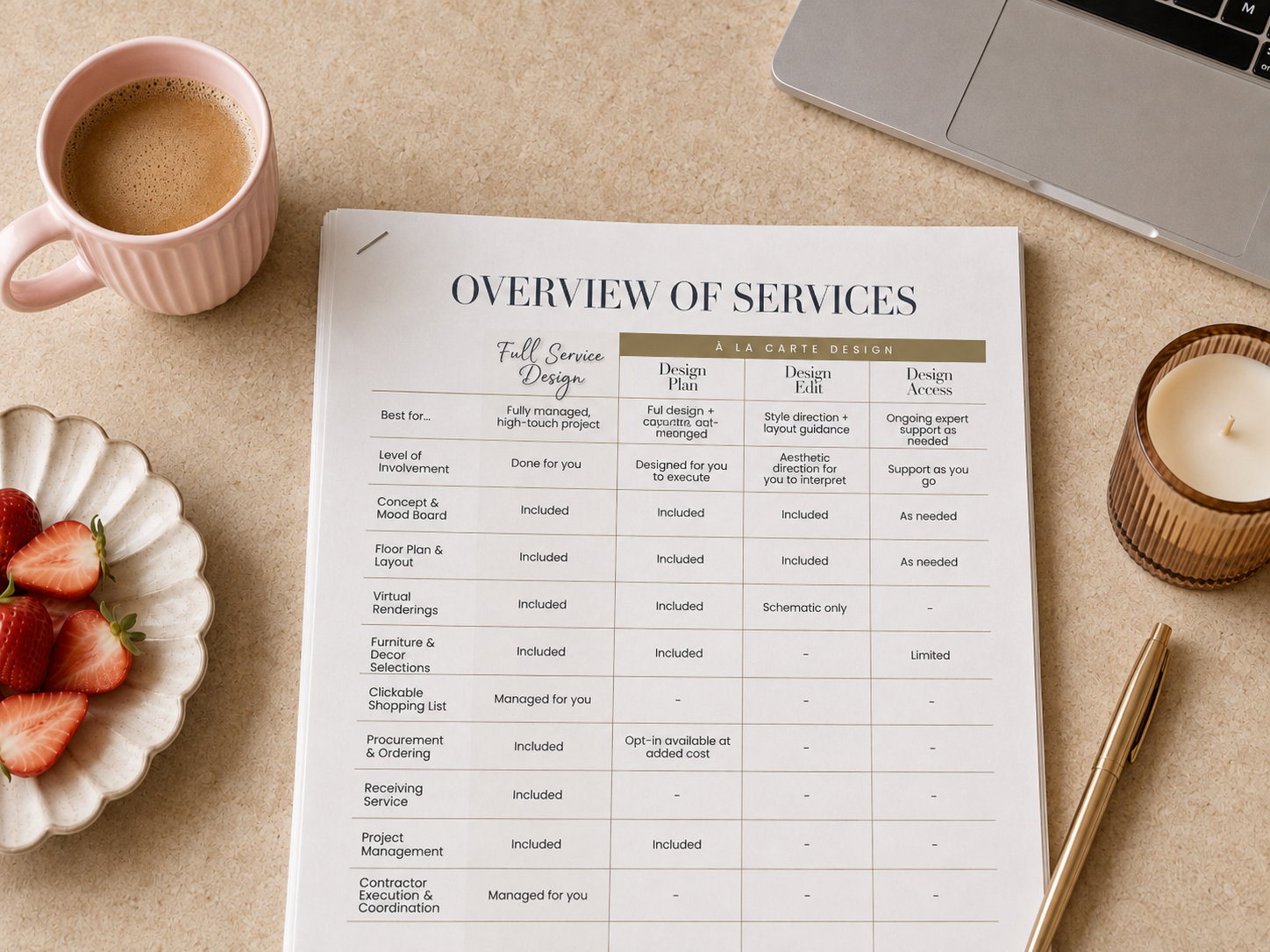
Here's what actually happens in the real world. Designers structure their fees in a few different ways, and once you know them, the whole thing stops feeling like a mystery and starts feeling like a choice you get to make.
Flat rate per room or per project. You know the number up front. No surprises, no meter running. This is often the most comfortable option for people who want certainty.
Hourly. Great for smaller questions or a single space where you just need direction and don't want to commit to a big engagement. You buy exactly as much of my brain as you need.
Design-only packages. You get the plan, the sources, the layout, the vision, all of it. Then you shop and install on your own timeline and at your own pace. You're paying for the expertise, not the errand-running.
Full service. We handle everything, start to finish, including ordering, tracking, and installation. This is the highest investment because it's the most hands-off for you. You're buying back your time and your peace of mind.
Now here's the part almost nobody tells you, and it's the part that matters most for your wallet: a good designer very often saves you money. I know that sounds like the kind of thing a designer would say.
Stay with me, because it's true, and I can show you exactly how.
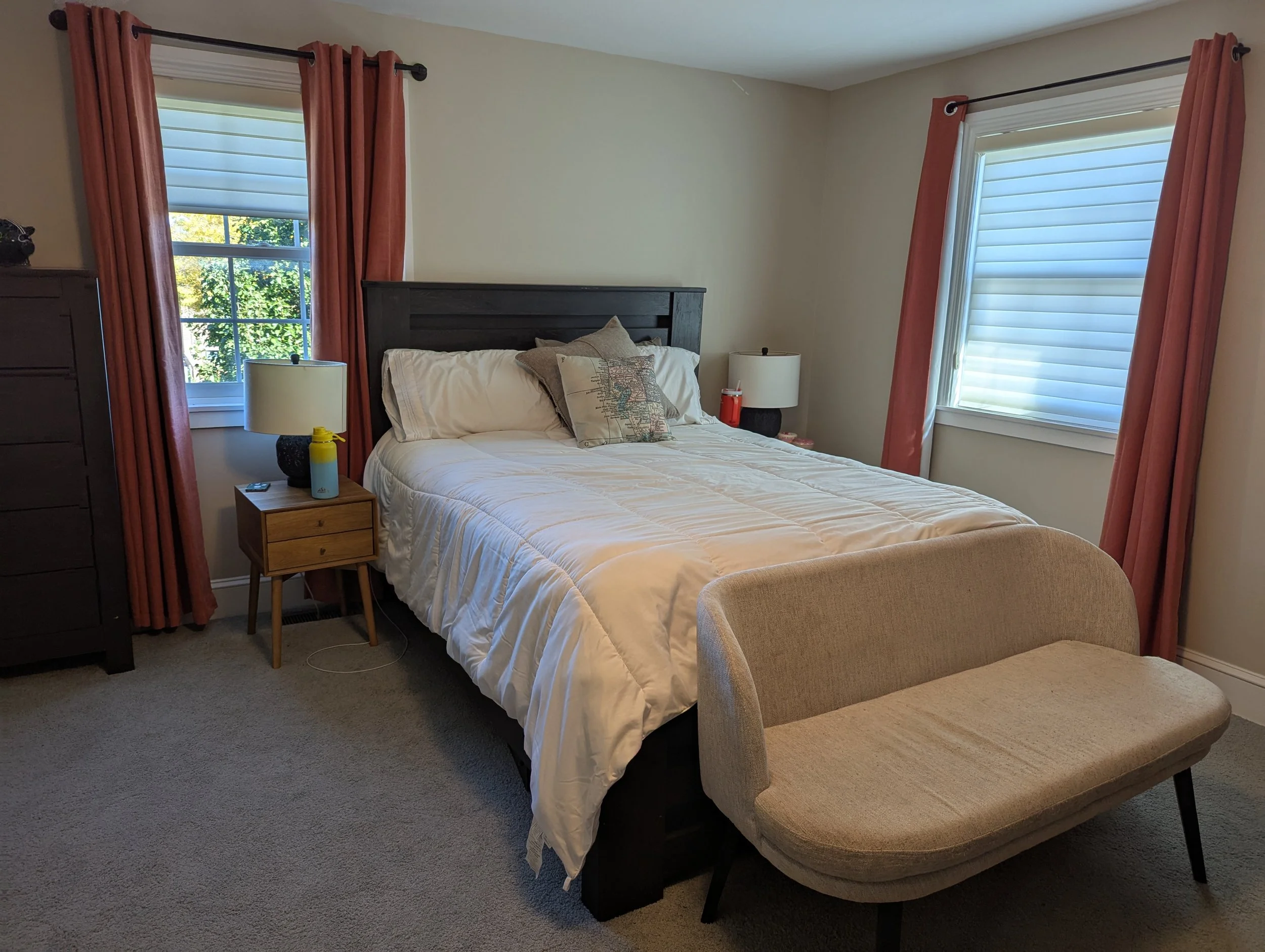
When you shop on your own, you make expensive mistakes. Not because you're careless, but because you can't see the whole board yet. You buy the sofa that looked perfect in the showroom and swallows your living room at home. You order the rug that photographs beautifully and turns out to be three sizes too small, so the whole room feels like it's floating. You paint, then realize the undertone fights your flooring, so you paint again. Every one of those is real money, and it adds up fast.
My whole job is to catch those before they happen. I keep you from buying the wrong thing twice. I know the exact rug size for your room before anything ships. I know which sofa brands hold up and which ones sag in a year. I know where it's worth spending real money and where you can save without anyone ever knowing the difference. That knowledge isn't a luxury tax on top of your project. It's insurance for your budget.
There's also a quieter kind of savings that's harder to put a number on but just as real: you stop wasting money on the slow bleed of "good enough." You know the cycle. You buy something that's fine, live with it while it nags at you, and eventually replace it with what you actually wanted in the first place. You paid twice. A designer helps you buy the right thing once, which is almost always cheaper than buying the wrong thing cheaply.
Let me make this concrete, because abstractions about "value" only go so far. Picture a living room, a fairly common starting point. Left to shop alone, a lot of people spend an evening online, fall for a sofa, and order it. Then a rug that looked right in the thumbnail. Then a coffee table, some lamps, a couple of accent chairs, all bought over a few months, each one a separate little decision made in isolation. Individually, every purchase felt reasonable. Together, they don't quite talk to each other. The sofa's a hair too big. The rug's a size too small. The lamps are lovely but the wrong scale for the tables. Nothing is wrong, exactly, but the room never clicks, and slowly, piece by piece, things get swapped out and re-bought until it finally works, at nearly double the original spend. That's not a story about bad taste. It's a story about shopping without a plan.
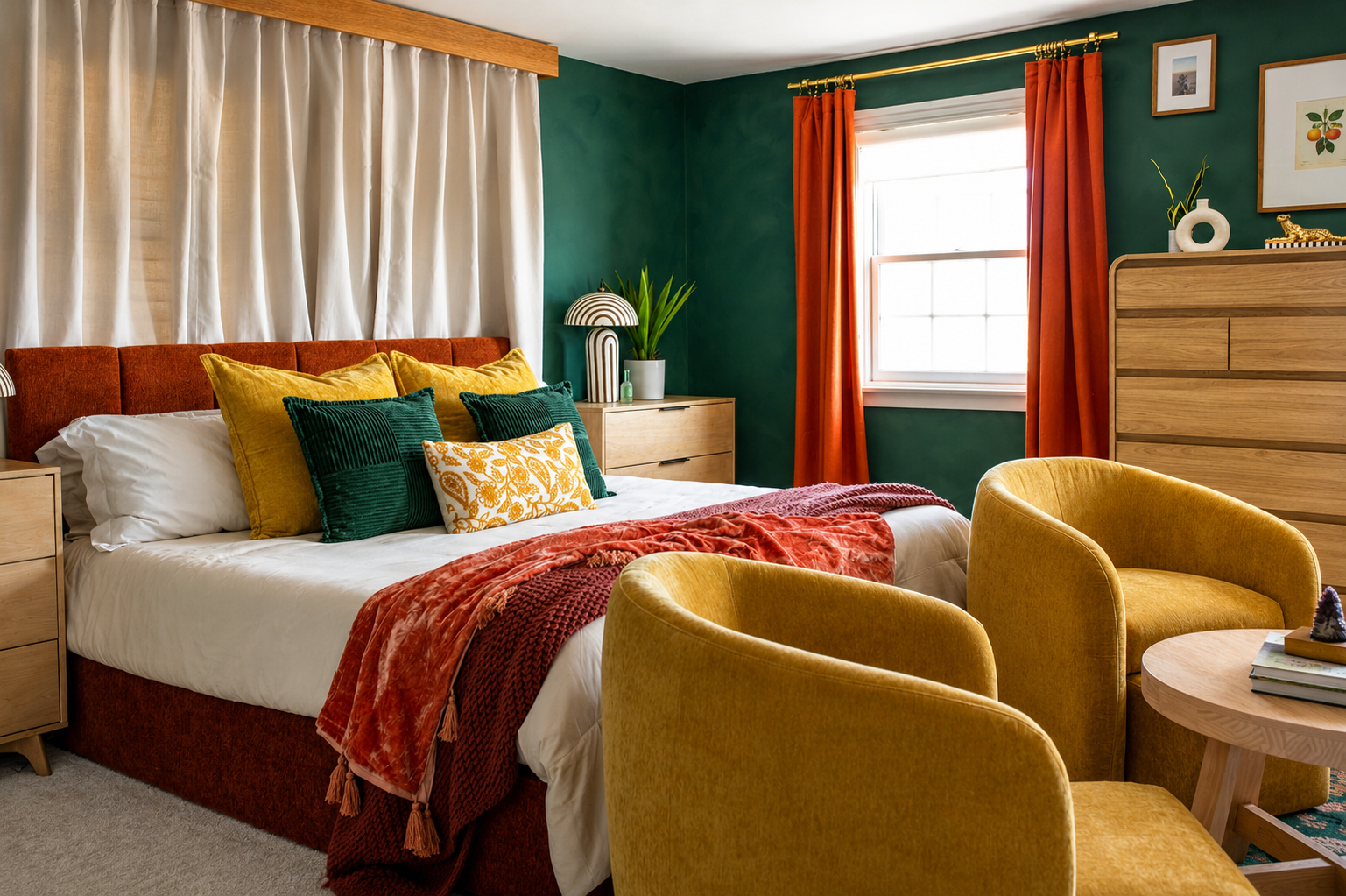
Now run the same room with a designer holding the whole picture from the start. The sofa is chosen to fit the actual dimensions. The rug is sized correctly the first time. The lamps are scaled to the tables they'll sit on. Everything is selected in relationship to everything else, so it lands right on the first try. Same room, often less total money, and none of the re-buying, returning, and quiet frustration in between. That coordination, that's a huge part of what the fee actually buys you.
There's one more piece of the money puzzle worth naming, because it surprises people: designers often have access to trade pricing and sources you simply can't reach on your own. That doesn't automatically make everything cheaper, and I'd never promise that. But it does mean that some of what you're paying in fees can come back to you in the form of pricing and options that aren't available at retail. It's not the whole story, and I won't pretend it always cancels out the fee. But it's a real factor that most people don't know exists, and it's worth putting on the table when you're weighing the cost.
So before you count yourself out, I want you to ask a different, better question. Not "can I afford a designer," but "which level of design fits where I am right now?" Because there is almost always a version that does. Maybe it's full service. Maybe it's a single hour of my time to keep you from a five-thousand-dollar mistake. Maybe it's a design plan you execute yourself over the next year. The point is that the door isn't closed. It just has more than one entrance than you were led to believe.
I also want to gently challenge the word "afford" itself, because it hides an assumption. When people ask if they can afford a designer, they're usually picturing the fee as pure added cost, a tax on top of a project they were going to do anyway. But if the project is happening either way, the real comparison isn't "with designer" versus "no money spent." It's "with a designer's plan" versus "without one." And the version without a plan is the one that quietly leaks money through mistakes, re-buys, and false starts. Framed that way, the question shifts from "can I afford design" to "can I afford to do this without it." For a lot of people, honestly, the answer to that second question is the more sobering one.
None of this means the fee is trivial, or that everyone should jump straight to full service. It means the price tag deserves a fair reading, one that accounts for what it prevents and returns, not just what it costs on the invoice. Interior design, done thoughtfully, is much closer to an investment in getting your home right than an expense you're throwing into a void. And like any investment, the smart move is to match the size of it to where you actually are.
So if you're at the very beginning, unsure whether any of this is for you, start smaller than you think you're allowed to. You don't have to commit to a whole engagement to feel what it's like to have a professional's eye on your space. You can start with the single change that gives you the most impact for the least money, prove to yourself that thoughtful design actually makes a difference in how your home feels, and go from there.
That's usually paint. It's the lowest-cost, highest-impact move in almost any room, and it's where I do some of my most careful thinking before a single other dollar gets spent.
Not sure where your money should go first? Start with my free Paint Color Helper Guide. It's the lowest-cost, highest-impact change in almost any room, and it'll show you exactly how I think about a space before I recommend spending on anything else. Consider it a no-risk first taste of working with me.