Designer Diaries: “Do I Even Need a Designer? I Have Pinterest and a Free Weekend.”
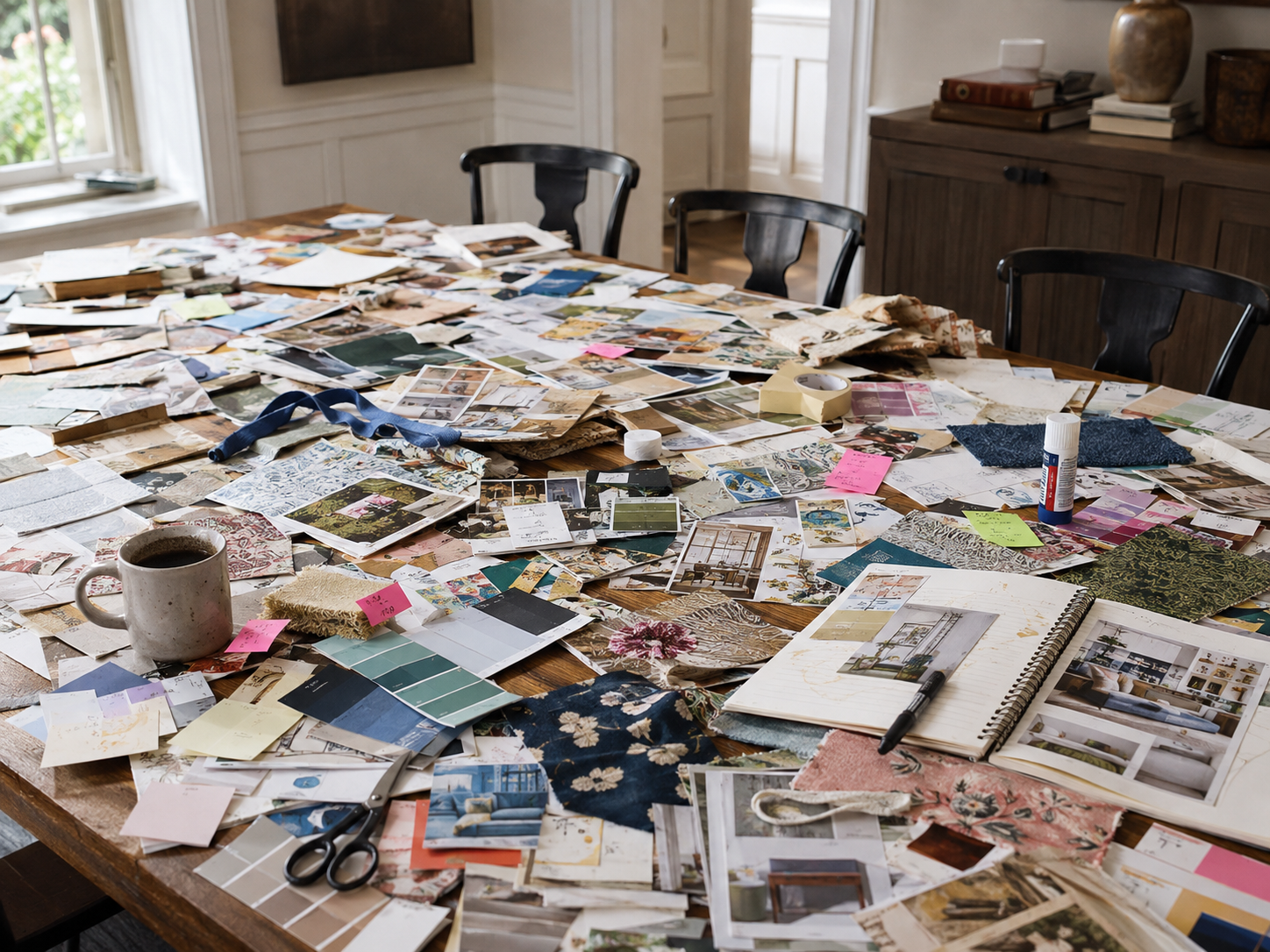
I love that you have a Pinterest board with four hundred pins. I mean that sincerely, no sarcasm. It tells me two important things: you have taste, and you care enough about your home to spend time dreaming about it. Those are exactly the qualities that make someone a joy to work with. So please don't read this as me telling you to put the phone down and hand everything over. That's not where I'm going.
But let me gently say the thing that needs saying: a board full of gorgeous rooms is not a plan. And the gap between "I love this" and "this actually works in my house" is the exact place where most well-intentioned DIY projects quietly fall apart. Not because the people doing them aren't smart or stylish. Because that gap is full of technical problems that are invisible until you're standing in them.
Let me show you what I mean, because the specifics matter.
Pinterest can't tell you if that sofa fits your room or eats it alive. The sofa in the photo is styled in a space that may be twice the size of yours, shot with a lens that makes everything look airy and perfect. You order it, it arrives, and suddenly you can't walk around your own coffee table. Scale is the number one thing that separates a room that works from a room that feels off, and it's almost impossible to eyeball from a picture.
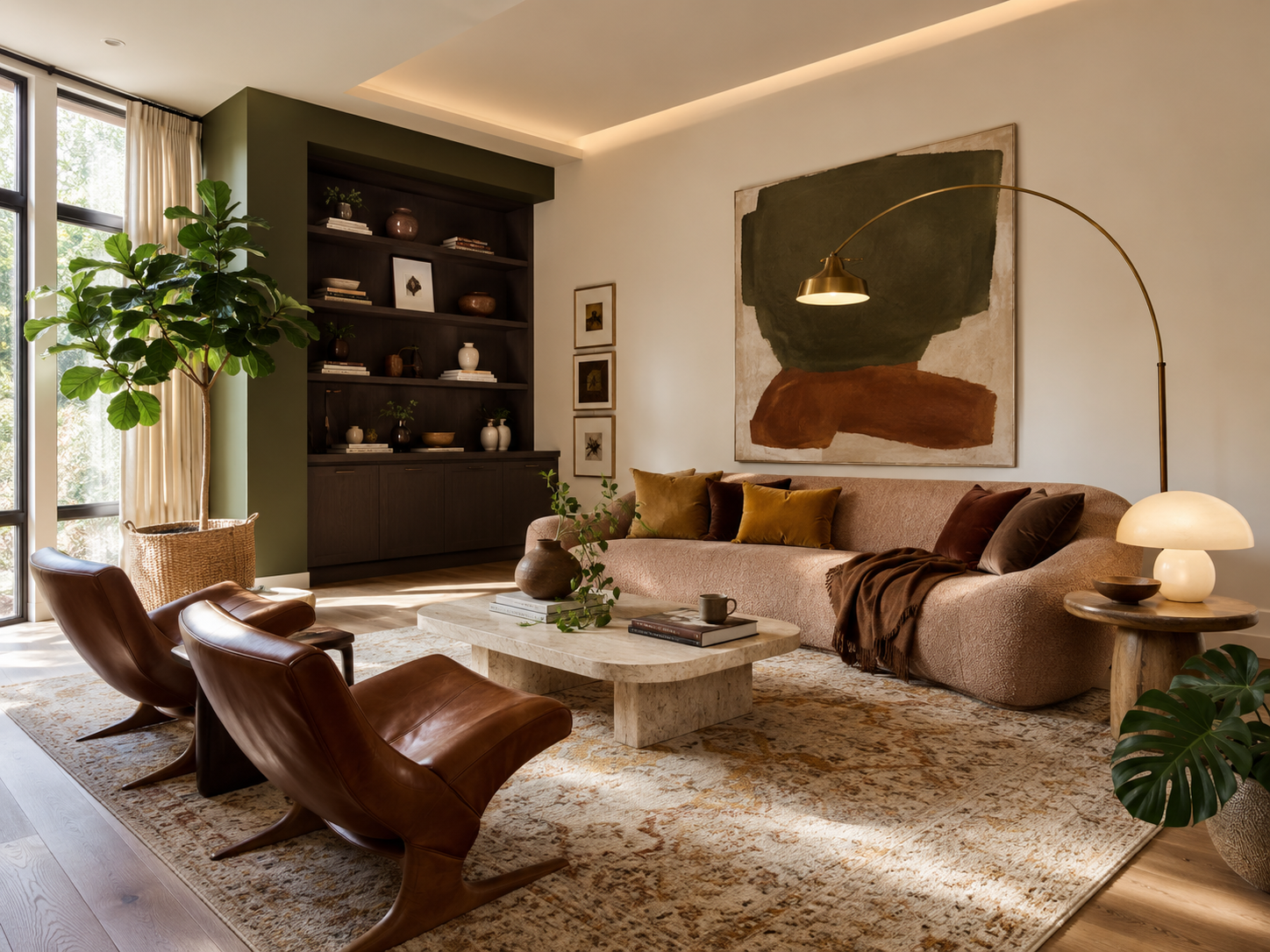
Pinterest can't tell you the rug in that dreamy photo is a nine-by-twelve and the one you're about to buy is a five-by-seven. This one is so common it's practically an epidemic. A rug that's too small makes an entire room feel cramped and unanchored, like the furniture is huddled on a little raft in the middle of the floor. The photo you loved almost certainly used a big, correctly-sized rug. You just couldn't tell, because a correctly-sized rug never calls attention to itself. It just quietly makes everything look right.
Pinterest can't sequence your project. It won't stop you from painting after the furniture arrives, or ordering the light fixture after the electrician has already come and gone, or falling in love with a wallpaper that has a fourteen-week lead time you didn't know about until you were ready to install. Order of operations is half of a smooth project, and it's completely invisible in an inspiration image.
Pinterest can't stop you from making the same three or four proportion mistakes almost everyone makes. Curtains hung too low, so the ceilings look short. Art hung too high, floating up near the crown molding with nothing to relate to. Pendant lights at the wrong height. A gallery wall spaced just slightly wrong so it reads as chaotic instead of collected. None of these are hard to fix once you know the rules. The problem is that Pinterest shows you the finished result and never the rules.
And here's one the pins almost never reveal: lighting. That warm, glowing, magazine-perfect room you saved? A huge part of what makes it feel that way is a deliberate layering of light, ambient, task, and accent, at the right temperatures, often on dimmers, working together. What most homes actually have is a single harsh ceiling fixture blasting the whole room flat. You can buy every beautiful object in that inspiration photo and still not get the feeling, because the feeling was mostly light, and light is invisible in a picture. It's one of the most common reasons a DIY room ends up looking "almost right but somehow not." The stuff is there. The light isn't.
Pinterest also can't help you with flow, the way you actually move through and use a space. A photo is a frozen, staged moment shot from the one flattering angle. It can't tell you whether you'll bark your shin on that gorgeous bench every time you round the corner, whether there's anywhere to set down a drink where you actually sit, or whether the beautiful layout leaves a comfortable path from the door to the couch. Real rooms are used, not just looked at, and usability is exactly the layer that inspiration images are structurally incapable of showing you.
So here's the honest distinction I want to leave you with, because I think it clears up a lot: there's a difference between decorating and designing. Decorating is picking things you like. Designing is making them work together, in your specific room, at your specific scale, for your specific life. You can be a genuinely great decorator, with wonderful taste, and still end up with a room that feels slightly off, because the design layer, the invisible structural stuff underneath the pretty, wasn't handled.
None of this means you can't DIY your space. Plenty of people do, and do it well, especially when they slow down and learn the rules the pins never taught them. What I actually want you to understand is that hiring help isn't all or nothing. It's a dial, not a switch. Sometimes you need the whole team and the full build-out. Sometimes you just need one expert answer at the right moment to keep you from a two-thousand-dollar mistake. Both are legitimate. Both are worth it.
There's also an emotional cost to going it fully alone that doesn't get talked about enough, and it has nothing to do with taste. It's overwhelm. When every single choice is yours, from the paint undertone to the drawer pulls to which of nine thousand nearly-identical beige sofas is the one, decision fatigue sets in fast. People start a project full of excitement and stall out three weeks later, paralyzed, with a cart full of tabs and a growing dread every time they open the room. That stall is one of the most common ways DIY projects die. Not from a lack of taste or effort, but from the sheer exhausting volume of decisions with no one to narrow the field. A professional's job is partly just to hand you three good options instead of nine thousand, and you'd be amazed how much lighter the whole thing feels the moment someone does that.
The people who get the most out of their homes, in my experience, aren't the ones who insist on doing everything themselves, and they aren't the ones who outsource every single choice. They're the ones who know which decisions they can happily make on their own and which ones are worth getting right the first time with a professional's eye. Knowing the difference is its own kind of wisdom, and it saves an enormous amount of money and heartache. It's not a question of whether you're capable. Plenty of capable people bring in help precisely because they're smart about where their time and energy are best spent.
Speaking of mistakes worth avoiding, let me point you at the single most common one, the one I mentioned earlier that trips up more homes than anything else.
The rug is wrong in more houses than any other single thing. Too small, floating, unanchored, quietly making the whole room feel off without the owner ever knowing why. So I made you a free Rug Sizing Guide that takes all the guesswork out of it, room by room, so you never make that error again. Grab it, and let it be proof of how much difference one right-sized decision makes. [LINK: Rug Sizing Guide]